
 English
 Español
 Français
 Deutsch
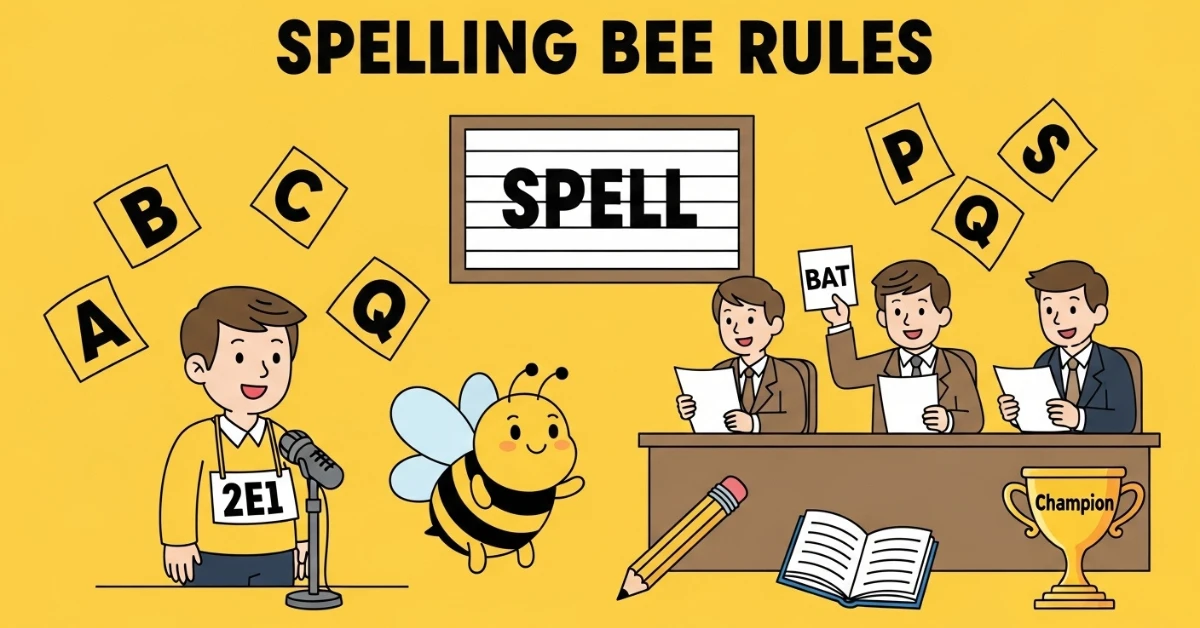
What Are Spelling Bee Rules?
Spelling bee rules are guidelines that define how word competitions are conducted. They cover:
- ➥Who can compete (eligibility)
- ➥How words are given (pronouncer, judges)
- ➥How contestants respond (spelling aloud, time limits)
- ➥What happens in tie-breakers, spell-offs, or appeals
In short: they keep the game fair, consistent, and fun , whether in classrooms, auditoriums, or online platforms like spellbeeonline.com.
Official Spelling Bee Rules and Guidelines
The Scripps National Spelling Bee (SNSB) is the world’s most recognized competition, and many schools adapt its format. Here are the core rules:
Eligibility Requirements
- ➥Contestants must be in Grade 8 or below.
- ➥Age limits apply (usually under 15 years old by August 31 of the competition year).
- ➥Spellers must attend a school that has officially registered.
Contest Structure
- ➥Bees progress through rounds: preliminaries, quarterfinals, semifinals, and finals.
- ➥In each round, a pronouncer gives the word, while judges oversee correctness.
- ➥A misspelled word usually means elimination , unless all spellers miss it, in which case the round is repeated.
Vocabulary & Spell-Off Rounds
- ➥Many bees now include vocabulary questions, where contestants choose the correct definition of a word.
- ➥In case of a tie, a spell-off is used: spellers get 90 seconds to spell as many words as possible.
Tie-Breakers and Appeals
- ➥If two finalists miss the same word, they often continue until one spells correctly.
- ➥Parents or teachers may file an appeal if they believe a word was unfairly presented.
Common Rules Followed in School and Local Spelling Bees
While smaller bees follow Scripps for guidance, they may add local variations.
Time Limits for Spellers
- ➥Once the pronouncer says the word, spellers usually have 20–30 seconds to respond.
- ➥Retracing is allowed , you can restart spelling the same word, but not change the order of letters.
Role of Officials
- ➥Pronouncer: reads the word clearly.
- ➥Judges: decide if the spelling is correct.
- ➥Coordinator: manages rounds, seating, and eligibility.
Speller Requests
Contestants can ask for:
- ➥Definition
- ➥Part of speech
- ➥Language of origin
- ➥Sentence usage
- ➥Alternate pronunciations
Word Variations
- ➥Homonyms: The pronouncer will clarify with a definition.
- ➥Capitalization and punctuation: usually ignored unless specified.
- ➥Alternate spellings: allowed only if listed in the official dictionary.
How Spelling Bee Games Adapt the Rules for Players
At spellbeeonline.com and similar platforms, rules are adapted to make play engaging:
Scoring Systems and Ranks
- ➥Instead of elimination, players earn points.
- ➥Levels range from Beginner → Skilled → Champion, rewarding consistency.
Pangrams and Word List Challenges
- ➥A pangram uses all letters at least once , the ultimate puzzle challenge.
- ➥Word lists are curated for both learning and fun gameplay.
Solo vs. Multiplayer
- ➥Solo mode builds vocabulary at your own pace.
- ➥Multiplayer or group challenges simulate the competitive buzz of live bees.
Rule Variations Across Schools and Competitions
Different regions add their own flavor to spelling bee rules:
- ➥Brookline Schools (USA): 20-second time limit, must face judges.
- ➥Roseburg District: words pronounced strictly by diacritical marking.
- ➥Regional Bees: often have their own tie-breaker rules, like replaying rounds.
- ➥International Bees: may adapt to local languages and scripts.
Geo-tip: If you’re preparing outside the U.S., always check your local district or national rules, since they may differ.
How to Prepare and Win While Following the Rules
Consistent training with a structured spelling bee practice routine helps spellers handle real competition pressure.Success in spelling bees is not just about memorizing words. Here’s how to combine preparation with rule awareness:
Practice With Word Lists and Flashcards
Start with official lists from your school or competition.
Learn Roots and Origins
Greek, Latin, and Germanic roots explain why words are spelled the way they are.
Train for Timed Rounds
Set a 30-second timer to simulate pronouncer time limits.
Mock Spell-Offs
Practice rapid-fire spelling for 90 seconds , just like tie-break rounds. Start your preparation with official spelling bee words by grade to match your current level and gradually build difficulty.
Final Thoughts: Why Knowing the Rules Matters
Whether you’re a student preparing for school competitions, a parent guiding your child, or a word game enthusiast on spellbeeonline.com , mastering the rules ensures fairness, boosts confidence, and makes spelling challenges more rewarding.
The rules may seem strict, but they’re designed to create a level playing field , and once you understand them, you’ll be one step closer to becoming a true Spelling Bee Champion.
Spelling Bee game rules at a glance
- Make words with at least four letters.
- Every word must include the center letter.
- Use only the seven letters in the hive; letters can be used more than once.
- Proper nouns, hyphenated words and offensive words do not count.
- 4-letter words score 1 point; longer words score 1 point per letter.
- A pangram uses all seven letters and earns a 7-point bonus.
Want to see these rules in action? Start a free round of Spelling Bee Unlimited or read how ranks work.
Keep learning
- ➥ Spelling Bee for Kids
- ➥ Spelling Bee Word List
- ➥ Word Bee Game
- ➥ Play Spelling Bee Unlimited (free)
- ➥ How to Play Spelling Bee
- ➥ Spelling Bee Ranks Explained
- ➥ Spelling Bee Pangram Guide
- ➥ Spelling Bee Hints
- ➥ Spelling Bee Solver Guide
- ➥ Spelling Bee Unlimited Guide
- ➥ Spelling Bee Unlimited vs NYT
- ➥ Spelling Bee Unblocked
- ➥ Spelling Bee Words by Grade
- ➥ Hardest Spelling Bee Words
- ➥ Spelling Bee Practice Routine
- ➥ Spell Bee Spellings